Many longtime homeowners created their Living Trust years ago when their children were younger, their financial situation looked different, or before retirement became a reality.But here’s

Dated: March 15 2023
Views: 50
:max_bytes(150000):strip_icc():format(webp)/how-much-do-we-need-as-a-down-payment-to-buy-a-home-1798252_FINAL-d436ccb9c27f4ced9c60c70eb01a4fdb.png)
Your down payment is the amount you pay upfront to purchase a house. Most people think they need to put down 20%, but many loans allow you to pay less than that.
While you can purchase a home with a down payment under 20%, doing so may increase the overall cost of homeownership. There are a few factors to consider when you're determining how much to put down on a house.
Calculating how much to put down depends a great deal on the purchase price of the home. If you're shopping for a $250,000 home, 20% down would be $50,000. But if you're shopping for a $600,000 home, 20% down would be $120,000—nearly two and a half times as much. That's why it's important to know how much house you can afford overall.
Since your lender might approve you for more than you're actually willing to spend, use a few guidelines to calculate how much home you can afford. For instance, review your budget, and target a figure that will cap your monthly mortgage payment at no more than 28% of your income. If you're already carrying significant debt (such as student loan debt) this figure would be lower.
Many financial experts advise you not to spend more than 36% of your income on debt. This helps ensure that you have enough money left over each month to reach other financial goals.
A down payment has a big impact on a mortgage, including the type of loan you qualify for, your interest rate, and the cost of the loan.
At a minimum, you can pay 3% down. Government-backed mortgages from the Federal Housing Administration (FHA) allow you to pay just 3.5% down, and with a lower credit score.
Making a higher down payment generally means your loan will be less expensive because your down payment affects your interest rate and the amount you borrow. Your monthly payments will be lower, and you'll pay less interest over the life of your loan. With a bigger down payment, you'll have more equity in your home, which can protect you if home values go down.
It may be easier to buy a house with a smaller down payment, but your monthly payment will be higher, and you'll pay more in interest over the life of the loan. Depending on your budget, you may have to purchase a less expensive home so that your monthly payment is more affordable.
We used a mortgage calculator to compare down payments for a $300,000 home purchase in the table below. Use it to see how much you could put down on a house and what the results would be. Note that the total monthly payment includes PMI, insurance, and property tax.
Many states offer down payment assistance programs to help homebuyers purchase a home. Programs vary by state and may have credit score or income requirements. Some programs also require applicants to attend a home buying course to qualify for assistance. To locate programs in your state, start with your local housing authority or board of housing. Many offer programs or help you find organizations offering down payment assistance.
Unless your bid is over the asking price, the down payment probably won't sway the seller. They'll get the same amount at closing. Making a bigger down payment may give you some negotiating power in a competitive housing market, however. For instance, if you're paying more than 20% down and buying with a conventional mortgage, you have the flexibility to make your home offer more attractive with concessions like waiving appraisal and inspection contract contingencies.
Paying less money down and shopping with an FHA or VA loan means you can't skip the appraisal or the inspection (which are requirements of those loans) to make a stronger bid.
Whether you buy now or save up a larger down payment depends on your finances and your overall goals. There are pros and cons of each, but here are some questions to consider.
If you have more than 20% saved up for your down payment, investing some of your savings may be a better option versus putting the extra toward your down payment.
Let's say you're purchasing a $300,000 home at 4% APR and you could make a 25% down payment. If you use all the money towards your down payment, your monthly payment would be $1,074, and your total mortgage interest after 30 years would be $161,706.
What if you put 20% down instead and invested the rest? Paying 20% down would mean a monthly payment of $1,145 and total interest of $172,487. If you invested the remaining $15,000 and received an average 10% return, in 30 years, your initial investment would grow to $261,741 without any additional contributions. That more than covers the additional interest you paid by choosing to invest instead of making a larger down payment.
While the traditional advice is to pay 20% down on a house to avoid paying private mortgage insurance, you can buy a house with a lower down payment. Making a lower down payment allows you to buy a house sooner than if you waited to have the full 20% down.
There's no one-size-fits-all answer. Reviewing your finances and considering your home ownership goals will help you make the best choice.
The median down payment is 12% for all homebuyers and 6% for first-time homebuyers, according to a 2020 report by the National Association of Realtors.
Creating a budget and setting a goal are two essential steps to saving up for a down payment. Estimate the amount you'd need for different down payment scenarios—3%, 5%, 10%, and 20%—to understand what you can realistically save. Then, automate your savings to make it easier to reach your goal.
You could be guilty of loan fraud if you repay a gifted down payment after providing documents to your lender confirming the down payment was a gift. Misrepresenting the down payment gift prevents the lender from accurately predicting your ability to repay the loan.
Source: TheBalance.com
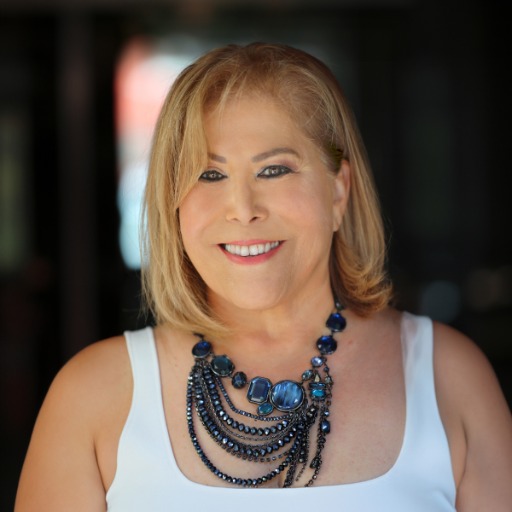
My goal is simple: a commitment to finding the dream home, purchase, or sale for my clients. With more than 25 years of experience in the real estate industry & the Los Angeles County market, my t....
Many longtime homeowners created their Living Trust years ago when their children were younger, their financial situation looked different, or before retirement became a reality.But here’s
Why You’ll Love Owning a HomeSome HighlightsOwning a home comes with many benefits, both non-financial and financial.From the sense of accomplishment and freedom of expression, to growing
The Secret To Selling This Spring: Start the Prep Work NowSpring is the busiest season in the housing market. It’s the time of year when buyers are most active – that means it’s
A Record Percent of Buyers Are Planning To Move in 2025 – Are You?This could be the year to sell your house – and here’s why. According to a recent NerdWallet
 Based on information from California Regional Multiple Listing Service, Inc. as of September 23, 2026 6:51 PM UTC This information is for your personal, non-commercial use and may not be used for any purpose other than to identify prospective properties you may be interested in purchasing. Display of MLS data is usually deemed reliable but is NOT guaranteed accurate by the MLS. Buyers are responsible for verifying the accuracy of all information and should investigate the data themselves or retain appropriate professionals. Information from sources other than the Listing Agent may have been included in the MLS data. Unless otherwise specified in writing, Broker/Agent has not and will not verify any information obtained from other sources. The Broker/Agent providing the information contained herein may or may not have been the Listing and/or Selling Agent.
Based on information from September 23, 2026 6:51 PM UTC The information being provided by CRMLS is for the visitor's personal, noncommercial use and may not be used for any purpose other than to identify prospective properties visitor may be interested in purchasing. The data contained herein is copyrighted by CRMLS, CLAW, i-Tech MLS, PSRMLS and/or VCRDS and is protected by all applicable copyright laws. Any dissemination of this information is in violation of copyright laws and is strictly prohibited.
Any property information referenced on this website comes from the Internet Data Exchange (IDX) program of CRMLS. All data, including all measurements and calculations of area, is obtained from various sources and has not been, and will not be, verified by broker or MLS. All information should be independently reviewed and verified for accuracy. Properties may or may not be listed by the office/agent presenting the information.
 Based on information from CRISNet MLS as of September 23, 2026 6:40 PM UTC All data, including all measurements and calculations of area, is obtained from various sources and has not been, and will not be, verified by broker or MLS. All information should be independently reviewed and verified for accuracy. Properties may or may not be listed by the office/agent presenting the information. The listing broker's offer of compensation is made only to participants of the MLS where the listing is filed.
© 2022 Inside Real Estate
Show More...
Based on information from CRISNet MLS as of September 23, 2026 6:40 PM UTC All data, including all measurements and calculations of area, is obtained from various sources and has not been, and will not be, verified by broker or MLS. All information should be independently reviewed and verified for accuracy. Properties may or may not be listed by the office/agent presenting the information. The listing broker's offer of compensation is made only to participants of the MLS where the listing is filed.
© 2022 Inside Real Estate
Show More...
